At Unity Foods, LLC, we believe healthy, delicious school meals begin with thoughtful partnerships between food suppliers and School Food & Nutrition Services teams. We understand the complexity school nutrition directors manage every day — from menu planning and recipe development to budgeting, procurement, storage, and service logistics.

As Unity Foods prepares to serve school districts across the Pacific Northwest, we are putting all the right systems in place — including licensing, documentation, and operational readiness — so we can be a dependable, compliant, and responsive partner when schools are ready to engage.

Understanding School Nutrition Goals

Every school district operates with its own priorities, constraints, and community values. Through our preparation and industry research, we recognize that:

  • Some districts prioritize Oregon- and Washington-grown products
  • Others focus on seasonal menus or culturally meaningful meals
  • Many are looking to expand the variety of local and regional foods available to students

Unity Foods is building its school program with flexibility in mind — preparing to support scratch cooking kitchens, heat-and-serve models, and grab-and-go service lines. Our approach centers on listening first, then aligning product offerings to each district’s goals, kitchen capacity, and service style.

Product Support Designed for School Environments

School nutrition programs require clarity, consistency, and compliance. Unity Foods is structuring its systems to meet those needs from day one.

Clear, Ready-to-Use Product Information

We are assembling comprehensive product documentation to support menu planning and regulatory requirements, including:

  • Spec sheets
  • Nutrition and ingredient information
  • Allergen disclosures
  • Pack sizes, yields, and storage guidance
  • Basic preparation and serving suggestions

Our goal is to make product evaluation and approval as straightforward as possible for school teams.

Packaging & Format Options That Respect Staff Capacity

We recognize that labor and equipment limitations are real challenges for schools. Unity Foods is curating a product mix designed to offer multiple solutions, including:

  • Bulk fresh or frozen items
  • Individually wrapped options
  • Pre-cut and value-added products
  • Heat-and-serve selections
  • Fully cooked, portion-ready items

Each format is evaluated for how it fits into real school kitchens — helping programs serve nutritious meals without overextending staff or resources.

Preparing to Support Sourcing & Procurement Needs

Navigating procurement is often one of the most challenging aspects of school foodservice. Unity Foods is proactively building internal processes to align with public-sector purchasing requirements.

Local & Regional Product Focus

Unity Foods is developing relationships with producers across Oregon and Washington to support future access to:

  • Regional proteins
  • Shelf-stable pantry items
  • Culturally relevant foods
  • Seasonal Northwest specialties

Our intent is to make it easier for districts to explore and expand local sourcing as opportunities arise.

Procurement-Ready by Design

As we prepare to work with schools, we are structuring our systems to support:

  • Advance pricing for menu forecasting
  • Quote support for formal and informal solicitations
  • Alignment with Farm to School Procurement Grant requirements
  • Coordination with Food Service Management Companies (FSMCs)

This groundwork ensures Unity Foods can respond quickly, accurately, and compliantly when districts initiate conversations.

Storage, Handling & Menu Considerations

We understand that successful product adoption depends on how well items fit into a district’s existing infrastructure. Unity Foods is preparing to provide guidance around:

  • Storage requirements (dry, refrigerated, frozen)
  • Shelf life and food safety considerations
  • Preparation flexibility
  • Menu integration ideas
  • Cultural and seasonal relevance

This planning-first approach helps schools minimize waste and maximize value when introducing new products.

Why Schools May Choose to Work with Unity Foods

Unity Foods is intentionally positioning itself as a school-ready distributor — focused on preparation, transparency, and long-term partnership. Our commitment includes:

  • Building compliant licensing and operational systems
  • Prioritizing local and regional sourcing
  • Designing product offerings around real kitchen constraints
  • Preparing procurement-friendly documentation
  • Offering responsive, relationship-driven communication
  • Understanding both self-operated districts and FSMC environments

Our mission is simple: to be ready — when schools are ready — to support student nutrition with foods that are flavorful, culturally relevant, and locally rooted.

Let’s Start the Conversation

Unity Foods is actively preparing to support school meal programs across the Pacific Northwest. If your district is planning ahead, exploring new sourcing options, or seeking future distribution partners aligned with Farm to School values, we welcome the opportunity to connect.



Running a restaurant has never been for the faint of heart — and today’s economic pressures aren’t making it any easier. Rising ingredient prices, labor shortages, increased utility costs, and shifting consumer habits have squeezed margins to historic lows. For many operators, the question has shifted from How do I grow? to How do I stay profitable without burning out?

One of the most effective — yet frequently overlooked — ways to strengthen profitability lies in a number every restaurateur knows well: prime costs. This is the combined total of food and labor expenses. In a well-run operation, prime costs should land between 55%–65% of total revenue. When that number creeps higher, profits vanish.

So how do you bring it back down?

The most direct solutions are also the most powerful: lower food costs and reduce labor strain — without sacrificing quality or creativity.

That’s where Unity Foods, LLC is helping restaurant owners across Washington and Oregon regain control of their margins.

As an independent, locally owned distributor, Unity Foods offers competitive pricing on a broad portfolio of products. Many clients see immediate savings simply by switching suppliers — enough to meaningfully improve their monthly bottom line. But the real advantage goes far beyond cost.

Saving Labor Without Cutting Staff

Instead of sending employees to multiple wholesale stores or specialty shops, Unity Foods delivers directly to the restaurant. This eliminates unproductive labor hours, reduces vehicle expenses, and keeps staff focused where they belong: in the kitchen and on the floor.

Operators report an unexpected benefit as well: peace of mind. With six-day-a-week delivery throughout Oregon and Washington, Unity Foods removes the stress of wondering whether critical ingredients will be in stock — or whether a service day will be derailed by last-minute substitutions.

In an industry where time truly is money, that reliability is invaluable.

The Hidden Math of Value-Added Products

Smart operators aren’t just reducing ingredient costs — they’re also using Unity Foods’ catalog to strategically reduce the labor side of the prime cost equation.

Unity Foods partners directly with local and regional manufacturers to source value-added products that deliver an “in-house made” feel without the in-house labor.

At first glance, pre-made items may seem more expensive than scratch cooking. But the math changes when you factor in:

  • Prep labor
  • Waste
  • Yield loss
  • Consistency issues
  • Training time
  • Speed during service

Consistency & Speed in Real Life

Take mashed potatoes. Scratch-made requires washing, peeling, boiling, mashing — hours of prep before service even begins.

A high-quality product like Lutosa Potato Purée removes all of that. Kitchens get a consistent, premium product ready in minutes, with fixed costs per serving and almost zero labor.

Local Quality, Zero Prep

Unity Foods also carries fresh, locally produced items like locally made hummus. Instead of soaking chickpeas, boiling batches, and managing blender loads, chefs receive a fresh, scratch-quality product — made by local producers, just not on their labor clock.

This approach eliminates hidden costs such as:

  • Over-ordering
  • Spoilage
  • Burnout from repetitive prep
  • Variability between prep cooks

Chefs regain the freedom to focus on plating, creativity, and speed — not peeling potatoes or managing batch inefficiencies.

The Bottom Line

Lowering your prime costs doesn’t just strengthen your P&L. It creates breathing room. It restores creativity in the kitchen. It frees owners to invest in staff, ambiance, marketing, and guest experience. And it brings back something many restaurant professionals have been missing: sustainability and joy in the craft.

If your restaurant is feeling the squeeze, it may be time to work smarter, not harder. Re-evaluating how—and where—you source your ingredients could be the most profitable decision you make this year.

Because when your supply chain works for you, everything else starts to fall into place.


Walk into almost any restaurant right now and you’ll feel it immediately: the industry is changing, but not in the “doom and gloom” way headlines like to frame it. People still love eating out — they’re just choosing differently.

Over the past year, something unusual has been happening in the data: sales are up, but fewer people are walking through the door. Operators aren’t serving more guests; they’re serving more careful guests. Diners haven’t disappeared — they’ve become selective, intentional, and far more value-focused than before.

This shift is quietly creating a new divide between concepts that connect and concepts that just can’t keep up.

The Value Shift No One Can Ignore

If there’s one thing driving behavior right now, it’s value — and not the “race to the bottom” version of value. Think clarity. predictability. A sense of getting something worth the price.

That’s why bundled meals, prix fixe menus, and all-in-one deals are suddenly mainstream again. Guests want to know what they’re spending before they sit down.

Restaurants offering simple, well-priced combinations are seeing traffic tick upward. Meanwhile, some fast-casual and premium quick-service concepts — the darlings of the last decade — are feeling more resistance as prices creep up without an obvious increase in perceived value.

People aren’t abandoning restaurants. They’re just asking:

“Where do I get the most out of this visit?”

Winners, Strugglers, and the New Landscape

This reset isn’t hitting all segments equally. That’s the quiet truth in the data.

Value-forward casual dining — the spots that offer a meal, a drink, and a familiar setting — are enjoying real loyalty right now. Pubs, neighborhood grills, and comfortable “meet-you-there” restaurants are benefitting from consumers who want experiences without the sticker shock.

Fast-casual concepts are in a tug-of-war: strong brands still hold their audience, but rising check averages are testing even the most loyal fans.

And fine dining? It’s steady on paper because check averages are high. But the guest count decline is real. It’s now more of an “occasion” than a habit.

The story isn’t that diners are spending less. It’s that they’re spending more carefully.

Dining Occasions Have Split in Two

Another shift is reshaping the industry: the occasions themselves have diverged.

On one side, there’s convenience dining — fast, predictable, and efficient. Delivery, takeout, mobile ordering, tighter menus, and food that travels well.

On the other side, there’s experience dining — the chef’s counter, the pop-up, the themed interior, the Instagram-worthy plating, the “you have to try this place.”

Anything in between? That’s where the struggle is.

Restaurants that don’t stand out for value or experience are being squeezed from both ends.

Behind the Scenes: Operators Are Reinventing the Playbook

Rising costs aren’t going away, so operators are getting smarter:

  • Menus are shrinking so kitchens can run tighter and faster.
  • Prep lists are getting simpler.
  • Ingredients are being chosen for versatility, not novelty.
  • Scheduling tools and ordering systems are getting an upgrade.
  • Packaging is becoming part of the menu strategy, not an afterthought.

The restaurants thriving today aren’t necessarily the biggest or fanciest — they’re the ones making intentional, nimble decisions.

What Smart Operators Are Doing Right Now

Across the board, the restaurants weathering this shift share four common moves:

1. They’re making value obvious.

Not cheaper — clearer. Bundles, tiers, prix fixe menus, and clean layout menus that guide the guest toward a decision.

2. They’ve stopped trying to be everything to everyone.

Identity matters more than ever. Guests want to know what you stand for — comfort food, celebrations, local flavor, late-night, quick convenience, whatever it is. Focus is winning.

3. They’re simplifying their systems, not just their menus.

Better prep flow, fewer SKUs, more consistency, and faster ticket times. Complexity is expensive.

4. They’re being upfront about pricing.

Guests accept inflation when they understand what they’re paying for. Operators who explain quality, sustainability, or sourcing decisions are keeping trust intact.

The Big Picture

This isn’t a restaurant recession. It’s a realignment. Guests still want to dine out — they just want it to feel worth it.

The winners are the concepts offering:

  • clear value
  • intentional experiences
  • streamlined operations
  • transparent pricing

Normal isn’t coming back. But this new landscape is full of opportunity for operators paying attention.

Where Unity Foods Fits Into This Reset

In this environment, every operational decision matters. The cost of proteins, the quality of your packaging, the availability of reliable alternatives — these influence your guest experience as much as the menu itself.

That’s where Unity Foods comes in.

As a regional distributor rooted in the Pacific Northwest, we help operators:

  • control costs without compromising quality
  • rethink menus based on demand and margin
  • access sustainable, local, and specialty items that set them apart
  • streamline purchasing and inventory
  • adapt quickly to market shifts and new regulations

We’re not just supplying food — we’re helping restaurants build resilience, refine their identity, and stay competitive in a market that’s changing fast.

Unity Foods — powering the Pacific Northwest food community, one kitchen at a time.

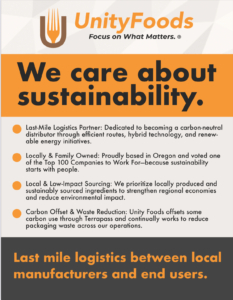
We care about sustainability.

For more than a decade, Unity Foods has led with purpose—delivering quality, locally sourced food while reimagining what sustainable distribution can look like in the Pacific Northwest.

Our Commitments

🟠 Last-Mile Logistics Partner

Dedicated to becoming a carbon-neutral distributor through efficient routes, hybrid and electric vehicle technology, and renewable energy initiatives. Our logistics team continually refines delivery patterns to minimize fuel use and emissions.

🟠 Food Carts, Fewer Cars

As the only broadline distributor focused on food carts, Unity Foods has reduced thousands of single-occupancy vehicle trips. What once required countless daily grocery store runs now happens in one consolidated, efficient delivery—saving fuel, time, and emissions.

🟠 Cleaner, Smarter Fleet

• Early adopter of hybrid technology with our first Hino Hybrid truck.

• Working with manufacturers on fully electric trucks.

• All sales vehicles are 100% electric.

• Offsetting 6 metric tons of carbon monthly through TerraPass.

🟠 Local & Family Owned

Proudly based in Oregon and voted one of Portland Business Journal’s Top 100 Companies to Work For. Our independent, people-first culture puts relationships and community before corporate bureaucracy.

🟠 Local & Low-Impact Sourcing

We’re making it easier for customers to find locally sourced or low-impact products:

1️⃣ Identify sustainable items and their sourcing.

2️⃣ Clearly label them in our catalog.

3️⃣ Market them to our customer base to encourage sustainable choices.

🟠 Reduce, Reuse, Recycle

• Reduce: Optimize routes, maximize fuel efficiency with hybrid trucks.

• Reuse: Repair and reuse pallets to extend life.

• Recycle: Provide bins near all waste receptacles to capture materials.

🟠 Hazardous Materials & Water Management

• Transitioning to certified green cleaners.

• Installing low-flow aerators and storm drain markers to protect waterways.

🟠 Energy Efficiency

Monthly contributions to TerraPass offset Unity Foods’ carbon footprint—currently 6 metric tons per month. Future goals include solar partnerships and renewable energy integration.

🟠 Community & Employee Engagement

We believe sustainability starts with people. Unity Foods is expanding employee-led green initiatives, community give-back programs, and partnerships with Clackamas County Sustainability to share our success and inspire others.

“Every decision—from the truck we drive to the partner we choose—has an impact.”

— Calvin Walsh, Founder & CEO, Unity Foods LLC

COME VISIT US:

Unity Foods, LLC

7750 NE 17th Ave

Portland, OR 97211

🌐 www.unityfoodsllc.com

📞 (Add your phone number here)

📧 info@unityfoodsllc.com

Last mile logistics between local manufacturers and end users.


For more than a decade, Unity Foods, LLC has proudly served the Pacific Northwest as an independent, broadline foodservice distributor with a focus on quality, community, and sustainability. Founded in 2012 by Calvin Walsh, our Portland-based company has become a trusted partner to restaurants, retailers, and manufacturers who care about where their food comes from—and how it gets there.

As we expand into the Seattle market, we’re bringing more than products. We’re bringing a mission: to deliver high-quality food while leading the way in sustainable distribution.

Sustainability Starts with Us

At Unity Foods, we believe every decision matters—from the trucks we drive to the partners we choose. Our approach to sustainability is practical, measurable, and always evolving. Here’s how we’re doing our part to reduce our environmental impact and build a better future for food distribution.

Last-Mile Logistics Partner

We’re dedicated to becoming a carbon-neutral distributor through efficient routing, hybrid and electric vehicle technology, and renewable energy initiatives. By constantly refining delivery routes and exploring cleaner transportation options, we’re cutting emissions while keeping service levels high.

Food Carts, Fewer Cars

Unity Foods has been the only broadline distributor focused on serving food carts—a choice that has had a meaningful environmental payoff. Traditionally, food cart owners made daily grocery store trips in single-occupancy vehicles, often driving to multiple stores to source their ingredients.

Our food cart delivery model has replaced thousands of those daily trips with consolidated, efficient deliveries—saving time, fuel, and carbon emissions while supporting local entrepreneurs.

Cleaner, Smarter Fleet

  • Early adopters of hybrid technology with our Hino Hybrid truck
  • Working with manufacturers to pilot fully electric trucks
  • All sales cars are 100% electric
  • Offsetting approximately 6 metric tons of carbon per month through TerraPass

We’re committed to testing and investing in the next generation of clean transport to make sustainable distribution possible for everyone we serve.

Local & Low-Impact Sourcing

Our goal is to make sustainable choices easier for our customers. That starts with identifying locally sourced or low-impact products and clearly labeling them in our catalog. We’re developing tools to help restaurants and retailers source more responsibly—without sacrificing quality or convenience.

Reduce, Reuse, Recycle

Sustainability isn’t just about vehicles and products—it’s about culture and daily habits.

  • Reduce: We prioritize route efficiency and hybrid technology to cut fuel use.
  • Reuse: We repair and reuse pallets to extend their life.
  • Recycle: Recycling bins are placed near every waste station throughout our facilities.

Energy, Water, and Waste Management

We offset our carbon footprint through monthly TerraPass contributions, currently at six metric tons per month. Across our facilities, we’re installing low-flow aerators to reduce water use and marking storm drains to prevent pollution. We also use and continually expand our portfolio of green cleaning products to ensure safer, more sustainable operations.

Community & Employee Engagement

At Unity Foods, sustainability starts with people. We’re proud to be recognized by the Portland Business Journal as one of the Top 100 Companies to Work For, because when our team thrives, our communities do too.

Our employees are engaged in shaping greener practices across departments, and we’re partnering with Clackamas County Sustainability and other local organizations to share our story and inspire collective action.

“Every decision—from the truck we drive to the partner we choose—has an impact.”

— Calvin Walsh, Founder & CEO, Unity Foods LLC

Join Us on the Road to a Greener Future

We’re proud to serve the Pacific Northwest with integrity, innovation, and care. Whether you’re a restaurant, retailer, or food manufacturer, we invite you to join us in shaping a more sustainable food system—one delivery at a time.

📍 Unity Foods, LLC

7750 NE 17th Ave, Portland, OR 97211

📞 503-683-1776

🌐 www.unityfoodsllc.com

📧 info@unityfoodsllc.com

Aircarbon Alliance: Turning Greenhouse Gas into Everyday Good

A New Kind of Sustainability

In a world increasingly aware of plastic pollution and carbon emissions, one company is taking an extraordinary approach: turning greenhouse gases into everyday products.

Meet Newlight Technologies, the California-based biotechnology firm behind Aircarbon®, a naturally occurring material made by microorganisms that consume greenhouse gases and convert them into a strong, flexible biopolymer.

With its latest initiative — the Aircarbon Alliance — Newlight is scaling that innovation to empower consumers, manufacturers, and foodservice partners to work together toward a shared goal: ending climate change through materials that remove carbon from the air.

From Carbon to Cutlery

Aircarbon® is composed of polyhydroxybutyrate (PHB), a natural polymer that exists throughout the biosphere — in plants, soil, and even ocean life. By recreating that process using greenhouse gases, Newlight captures carbon that would otherwise contribute to climate change and transforms it into usable, durable material for products like straws, utensils, and packaging.

The results are nothing short of remarkable.

“Composting is important, but it’s not enough,” says Mark Herrema, CEO of Newlight. “We can’t solve ocean health without tackling carbon in the atmosphere. Aircarbon lets us do both — reducing waste and removing carbon.”

Compostable, Durable, and Certified

The new Aircarbon Alliance Straws are built to perform — strong, smooth, and never soggy. They hold up beautifully in cold drinks and hot beverages alike, making them a real alternative to paper and plastic.

Even better, they’re certified by the Biodegradable Products Institute (BPI) for commercial composting and by TÜV Austria for home composting. That means they’ll safely decompose whether tossed in an industrial compost facility or a backyard bin.

Every straw and utensil is also PFAS-free, BPA-free, and FDA-approved, and complies with rigorous safety standards including REACH, RoHS, and California Proposition 65.

Measurable Climate Impact

Unlike traditional plastics — which emit carbon as they’re made — Aircarbon products remove greenhouse gases from the air.

Each Aircarbon Alliance product comes with third-party verification from ECG Global Solutions, ensuring its carbon-negative impact meets international standards such as ISO 14044:2006 and The Greenhouse Gas Protocol.

That means every straw, every fork, and every plate made with Aircarbon contributes to measurable climate repair.

“Small actions, taken together, can drive global change,” says Herrema. “That’s what the Aircarbon Alliance is about — empowering everyone to make a difference.”

A Pacific Northwest Connection

Here in the Northwest, Unity Foods LLC, a broadline food distributor servicing restaurants, manufacturers, institutions, and distributors throughout Oregon and Washington, has become a strong supporter of Aircarbon’s mission. With local deliveries to Bend, Corvallis, Centralia, Tacoma and Seattle, Unity Foods is committed to helping the region’s foodservice operators make more sustainable choices.

“These straws aren’t just compostable — they’re part of a bigger climate solution,” says Calvin Walsh, owner of Unity Foods. “Our customers want products that look good, perform well, and help the planet. Aircarbon Alliance checks every box. It’s exciting to bring this innovation to foodservice operators who care about both quality and carbon reduction.”

From coastal cafés to mountain resorts, more Northwest establishments are turning to Aircarbon Alliance straws as a practical, planet-positive upgrade — and Unity Foods is helping lead the charge.

“We see this as the future of food packaging,” adds Walsh. “If every restaurant in America switched to Aircarbon products, imagine the collective impact we’d have on reducing emissions.”

Why It Matters Now

According to NASA, coral reefs could decline by up to 99% if global warming reaches 2°C above pre-industrial levels. With the planet already at 1.1°C, urgent solutions are needed — not just to reduce waste, but to reverse emissions.

The Aircarbon Alliance brings a hopeful message to that challenge: that sustainability can be both beautiful and functional, and that collective consumer action can truly cool the planet.

Joining the Alliance

With its sleek new green straw symbolizing renewal and progress, the Aircarbon Alliance isn’t just selling products — it’s inviting businesses, consumers, and manufacturers to become part of a movement.

Whether you run a café, order takeout, or just care about what happens after you toss your straw, you’re part of the solution.

🌎 Learn more and join the movement at newlight.com

✳️ Quick Facts: Aircarbon Alliance Straws

  • Made from Aircarbon®, a natural carbon-capture material
  • Home & commercially compostable
  • BPI & TÜV certified
  • PFAS-, BPA-, and allergen-free
  • Verified carbon-negative lifecycle
  • Distributed in Oregon & Washington by Unity Foods LLC

For over a decade, Unity Foods, LLC has been a trusted name in the Pacific Northwest’s food distribution industry. Founded in 2012 by Calvin Walsh, the Portland-based company has built its reputation as one of the last independent, broadline foodservice distributors in the region—serving restaurants, retailers, and manufacturers with a commitment to quality, sustainability, and community engagement. Now, as Unity Foods expands into Seattle, it brings more than just products—it brings a mission: to deliver fresh, high-quality food while leading the way in sustainable distribution.

An Independent Spirit in a Corporate World

The food service distribution industry is dominated by large corporations, leaving many businesses with limited choices when it comes to sourcing ingredients. Unity Foods offers an alternative—a customer-first approach that prioritizes local relationships, flexible service, and fair pricing. “We’re not just another distributor—we’re a partner to our customers,” says Calvin Walsh, CEO of Unity Foods. “Seattle’s food scene is thriving with innovation, and we want to help restaurants and retailers access the best products without the constraints of corporate bureaucracy.”

Sustainability at Core Unity Foods isn’t just about delivering food—it’s about doing it responsibly. The company is actively working toward carbon-neutral distribution, to have 100% electric last-mile delivery trucks by 2030. In addition, they: Recycle all possible materials in operations Purchase carbon offset credits to balance energy use Partner with local farms and food producers to reduce transportation impact Seattle’s commitment to sustainability and responsible sourcing aligns perfectly with Unity Foods’ vision, making it a natural next step for the company.

A Best Place to Work—and One of the Fastest-Growing Companies—Now in Seattle

Recently recognized by the Portland Business Journal as one of the 100 Best Places to Work and ranked #27 among the Fastest Growing Companies, Unity Foods is expanding its award-winning culture to Seattle. The company prides itself on creating an environment where employees feel valued, empowered, and inspired to grow—directly translating to exceptional service for customers.

“We believe that when employees are happy, businesses thrive,” says Walsh. “That’s why we’ve built a workplace where people love to come to work every day.”

The Future of Food Distribution in Seattle

As Unity Foods enters the Seattle market, it aims to become the go-to distributor for restaurants, retailers, and food manufacturers looking for: Fresh, high-quality ingredients with personalized service Sustainable, environmentally responsible food distribution.

A flexible, independent alternative to corporate distributors Seattle’s food scene is one of the most dynamic in the country, and Unity Foods is ready to be a part of it. Whether it’s helping a local restaurant create its next signature dish or ensuring a grocery store is stocked with the freshest ingredients, Unity Foods is committed to delivering more than just food—they’re delivering a better future for the industry. Seattle, get ready—Unity Foods has arrived.


Seattle’s culinary scene is as diverse as it is dynamic—from Mediterranean-inspired plates to the creative offerings of local food trucks, neighborhood pubs, and lively bars. As restaurateurs and chefs continue to seek quality ingredients that are reliable, flexible, and delivered on time, Unity Foods LLC is stepping in to provide a solution tailored to the city’s thriving independent food businesses.

Founded in Portland, Unity Foods has earned a reputation for partnering with restaurants, caterers, and food trucks, offering high-quality products, flexible delivery options, and a service-first approach that puts chefs and operators at the center. Now, the company is expanding into Seattle, aiming to support the city’s independent operators and help them run smoother kitchens.

“Seattle’s food scene is unique, with incredible diversity and high standards,” says Calvin Russell Walsh, Founder and CEO of Unity Foods. “We wanted to bring a distribution model that’s not just about delivering boxes—it’s about understanding what each chef and kitchen really needs.”

Unity Foods specializes in supporting a wide variety of establishments, including:

  • Mediterranean restaurants: Supplying fresh, consistent ingredients for everything from mezze platters to grilled seafood and house-made sauces.
  • Food trucks: Providing flexible, timely deliveries to keep mobile kitchens stocked and ready for busy service hours.
  • Pubs and bars: Offering reliable beverage accompaniments and snack items, allowing operators to focus on service rather than inventory headaches.

One of the company’s biggest draws is the personal service model. Rather than operating solely as a traditional distributor, Unity Foods takes the time to understand each kitchen’s workflow, menu, and preferences. “It’s about building a relationship, not just fulfilling orders,” notes Shawn Riggs, Operations Manager.

In addition to serving established restaurants, Unity Foods is targeting Seattle’s burgeoning food truck and pop-up scene—a sector that’s been growing steadily over the past several years. By delivering fresh, chef-quality ingredients directly to mobile kitchens, the company is helping operators maintain consistency without the overhead of traditional supply chains.

“Many small operators struggle with large distributors that don’t understand their pace or menu needs,” says Bettina Carey, Marketing Director. “Unity Foods is filling that gap, helping chefs focus on what they do best: creating incredible dishes for their communities.”

For Seattle food operators looking to streamline their sourcing, improve delivery reliability, and access chef-focused service, Unity Foods offers a fresh approach to distribution. With a track record of growth and satisfaction in Portland, the company is poised to become a key partner for Seattle’s independent culinary scene.

Learn more or schedule a visit at www.unityfoodsllc.com.

Imagine you’ve just finished a meal at your favorite Seattle sushi bar, café, or diner. The check comes. You pick up the receipt, glance at it, maybe sign it—and either stash it in your wallet or toss it. It’s a tiny thing, but what if that slip of paper is quietly transferring chemicals into your skin—and potentially into your bloodstream?

What are BPA and BPS?

Bisphenol A (BPA) and its close cousin Bisphenol S (BPS) are chemicals used in “thermal paper”—the glossy receipts printed with heat rather than ink. The thermal printing process requires a “developer” chemical that changes color under heat; historically, BPA has filled that role, but as concerns over its safety have risen, BPS has become a common substitute.

Both BPA and BPS are endocrine disruptors. That means they can interfere with the body’s hormone systems. Various studies link them to reproductive issues, developmental disruptions, metabolic problems, obesity, attention disorders, and more. Pregnant people, infants, children, and workers who handle paper receipts regularly are among those at greatest risk.

How Does the Transfer Happen?

Receipt paper doesn’t “lock” these chemicals in—they’re applied as a coating and are loosely bound. That means:

  • When you touch them, chemicals can rub off onto your skin.
  • Moisture (from sweat, lotion, or hand sanitizer) can facilitate more transfer and increase absorption.
  • Once on skin, some amount may be absorbed directly through the skin barrier into the bloodstream.

In one study, handling a receipt for ten seconds transferred measurable amounts of BPA; rubbing or more aggressive contact transferred even more.

What about Restaurants?

Restaurants are a particular concern because:

  • Customers may touch the receipt shortly after handling food, increasing risks of accidental ingestion.
  • Workers—servers, cashiers, bussers—handle dozens or hundreds of receipts a day. Their cumulative exposure is much higher.
  • Some chains still use BPA or BPS thermal paper, depending on their supplier and whether they’ve moved to safer alternatives.

Thus, every time you get that printed check—or a printed credit-card slip—there is some risk, especially if you handle the paper and then touch your face, food, or don’t wash your hands soon after.

What is the Situation in Washington / Seattle?

Washington State has already moved forward with regulations addressing this issue:

  • There is a thermal receipt replacement program in Washington. As of January 1, 2026, thermal paper receipts containing bisphenols (including BPA and BPS) will be prohibited for sale, manufacture, or distribution in Washington.
  • The state is offering reimbursement programs for businesses to switch receipt paper or Point-Of-Sale (POS) devices to non-bisphenol alternatives. This helps small businesses that might otherwise struggle with the cost of switching.
  • Local investigations have confirmed that many stores (including groceries, chain retailers, and restaurants) still use receipt paper with bisphenols. Some have moved proactively to safer alternatives; many are in transition.

Local Businesses Leading the Way: Unity Foods, LLC

One company making a difference is Unity Foods, LLC, a regional food distributor serving the Pacific Northwest. In addition to supplying high-quality ingredients to restaurants, Unity Foods now offers BPA-free receipt paper to its customers. By providing access to safer, eco-friendly alternatives, Unity Foods is helping restaurant owners pave the way for BPA-free receipts at many of your local favorite dining spots.

This proactive approach not only prepares restaurants for Washington’s upcoming 2026 ban but also helps protect customers and employees from harmful chemical exposure—showing that small business suppliers can lead the way in public health innovation.

What Can Restaurants and Patrons Do?

For Restaurant Owners / Managers

  • Switch to non-bisphenol thermal paper (Unity Foods and other suppliers now offer these options).
  • Offer digital receipts (emailed or SMS), or give customers the option to skip a paper receipt altogether.
  • Train staff on handling practices—e.g. folding receipts so the printed side is inward, minimizing the customers’ handling of the paper.
  • Encourage frequent handwashing for staff who handle receipts often.

For Patrons / Diners

  • Whenever possible, ask for no paper receipt—or use the restaurant’s app or email receipt option.
  • If you do get a paper receipt, avoid touching the printed side; handle it from the back or folded so the printing is inside.
  • Wash your hands after handling receipts, especially before eating or touching your face.
  • Avoid using hand sanitizer immediately before or after handling receipts, as some studies suggest it increases absorption rates.

Why This Matters for Business in Seattle

  • Public health: Reducing exposure to endocrine-disrupting chemicals benefits customers, workers, and the community.
  • Consumer trust: Restaurants adopting safer practices may gain a competitive advantage as customers grow more aware of these risks.
  • Regulatory compliance: With the state ban coming in 2026, early action avoids last-minute costs and shows leadership.

Conclusion

A simple restaurant receipt may seem trivial, but it is a tangible route for exposure to chemicals with proven health risks. For Seattle’s restaurants, working with suppliers like Unity Foods, LLC to eliminate BPA and BPS receipt paper isn’t just about compliance—it’s about health, customer trust, and future-ready business practices.

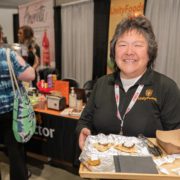
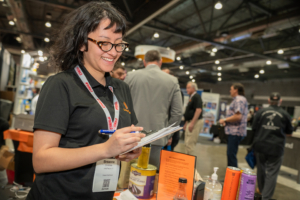
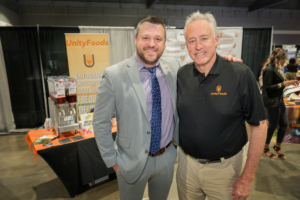
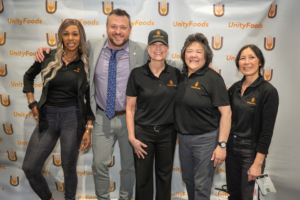
Unity Foods, an independent, locally owned distributor serving Western Washington and Oregon, made a standout appearance at the 2025 Northwest Food Show, hosted by the Oregon Restaurant & Lodging Association (ORLA). Held April 13–14 at the Portland Expo Center, the event brought together thousands of foodservice professionals from across the Pacific Northwest.

Unity Foods welcomed hundreds of buyers to its booth, where the spotlight was on the region’s top local vendors and a curated selection of Mediterranean offerings, reflecting the company’s deep commitment to regional sourcing and culinary diversity.

Unity Foods proudly featured a curated selection of standout vendors reflecting the best of local and Mediterranean-inspired food innovation. Showgoers sampled traditional hummus and tzatziki from Trazza Fine Lebanese Food, crafted with fresh, local ingredients; bold all-beef gyro strips from Kontos Foods, known for their authentic Mediterranean flavor; and the fiery, aromatic harissa from Mustapha’s, a favorite for chefs seeking North African heat.

Sustainable service solutions were on display from Leafline Packaging, offering eco-conscious options for modern food operations. On the ingredient side, Fresh Nature introduced nutrient-dense green garbanzo beans grown right here in the Pacific Northwest, while Auburn Dairy showcased their rich, locally crafted yogurt made with high-quality regional milk. Each partner represented Unity’s deep commitment to regional sourcing, culinary diversity, and quality-first distribution.

“We were proud to showcase our partners—many of whom are small, local producers whose products speak to the vibrant, diverse tastes of our region,” said Thu Thi, Sales Manager at Unity Foods. “Mediterranean cuisine continues to inspire chefs and buyers alike, and it was exciting to see how those flavors resonated alongside our standout Northwest brands.”

“We were thrilled by the response at this year’s show,” said Calvin Walsh, CEO at Unity Foods. “This event gave us a chance to showcase the power of our portfolio while building relationships with some of the most innovative buyers in the industry.”

He adds, “The NW Food Show was a fantastic opportunity to introduce high-quality, top-tier local manufacturers to family-operated restaurants and top chefs in the Pacific Northwest. By fostering these connections, we’re not only enhancing our culinary landscape but also building a strong and resilient local economy.”

Unity Foods’ booth featured tastings, conversations, and connections that emphasized its role as a nimble, responsive partner for restaurants, markets, and hospitality businesses. As an independent distributor, Unity Foods is rooted in the community it serves, with a geographical footprint covering Western Washington and Oregon.

For more information about Unity Foods and its vendor partnerships, visit https://www.unityfoodsnw.com.

About Unity Foods LLC

Founded in 2012, Unity Foods LLC is an independent, locally owned foodservice distributor based in Portland, Oregon. Serving restaurants, food carts, and hospitality businesses across Western Washington and Oregon, we specialize in sourcing and delivering high-quality, locally produced ingredients and Mediterranean-inspired products. Our commitment to personalized service, sustainability, and regional partnerships ensures that our clients receive the freshest products tailored to their unique needs. At Unity Foods, we pride ourselves on being more than a distributor—we’re a dedicated partner in our clients’ culinary success.

Contact:

Bettina Carey

Marketing Director

Unity Foods LLC

Email: bettina@unityfoodsllc.com

Phone Number: 206-349-4297